5 Best Kitchen Cabinet Materials for Modern Homes
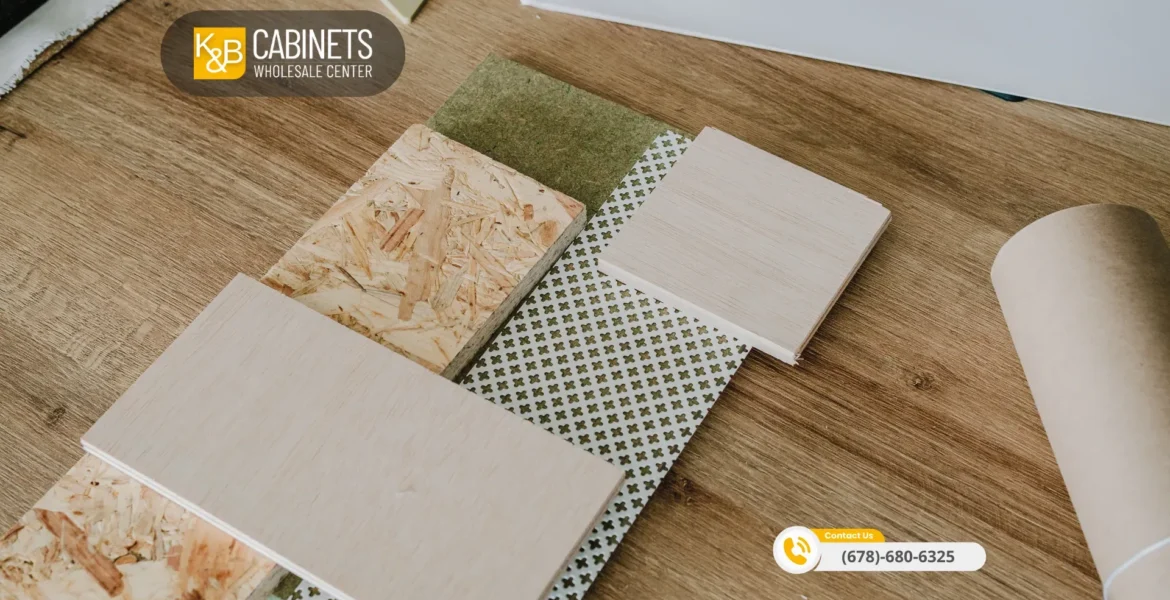
Selecting the right kitchen cabinet materials represents one of the most crucial decisions homeowners face when designing or renovating their modern kitchens. These materials serve as the foundation for both functionality and aesthetic appeal, influencing everything from daily usability to long-term maintenance requirements.
Understanding the characteristics, benefits, and limitations of different cabinet materials empowers homeowners to make informed decisions that align with their lifestyle, budget, and design vision.
Key Takeaways for the 5 Best Kitchen Cabinet Materials for Modern Homes
- Material Choice Drives Functionality and Style: The material selected for kitchen cabinets shapes both how the kitchen looks and how well it stands up to daily use, including resistance to moisture and wear.
- Durability and Cost Are Closely Linked: High-quality materials, such as solid wood and plywood, cost more initially but typically last longer, resulting in better long-term value compared to cheaper alternatives.
- Solid Wood Offers Natural Beauty and Longevity: Solid wood cabinets (like maple, oak, cherry, and hickory) stand out for their distinctive grain, ability to be refinished, and structural strength. They are also considered sustainable if sourced responsibly.
- Maintenance and Customization with Solid Wood: While solid wood requires regular care to prevent moisture damage and fading from sunlight, it can be sanded, stained, or painted multiple times to fit evolving tastes.
- Plywood Excels in Strength and Stability: Plywood’s cross-laminated layers give it excellent resistance to warping and splitting, making it a premium choice for cabinet boxes and structural elements.
- Finishing Versatility of Plywood: Plywood works well with a range of finishes and veneers, allowing for both striking natural looks and flawless painted surfaces in modern kitchen designs.
- MDF—Ideal for Painted, Smooth Finishes: Medium-density fiberboard (MDF) is a budget-friendly option perfect for painted cabinets with clean, smooth surfaces; however, it is more susceptible to moisture and is heavier than other options.
- MDF as a Budget-Focused Solution: MDF enables high-end, contemporary looks without the premium cost and is best used for door fronts and visible surfaces, paired with tougher materials for cabinet boxes.
- Particleboard as the Affordable Option: Particleboard is the most economical choice and best suited for low-traffic areas or temporary solutions, provided it is well-protected from moisture.
- Thermofoil and Laminate—Modern, Durable Aesthetics: These materials offer sleek, easy-to-clean surfaces and are available in a wide range of colors and patterns, making them a popular choice for contemporary kitchen styles.
- Matching Finishes and Practical Design Choices: Thermofoil and laminate cabinets pair well with modern hardware and counters, and edge finishes are essential for both durability and seamless looks.
- Combine Materials to Balance Budget and Performance: Successful modern kitchens often mix materials: use premium options like solid wood or plywood where durability or beauty matters most, and opt for MDF or laminate to keep costs in check while maintaining a contemporary look.
Article Contents
Why Kitchen Cabinet Materials Matter
The Role of Cabinet Materials in Function and Style
Kitchen cabinet materials fundamentally shape both the practical performance and visual impact of kitchen spaces. The material choice determines how well cabinets withstand daily wear, resist moisture damage, and maintain their appearance over time. From a functional perspective, different materials offer varying levels of strength, stability, and resistance to environmental factors like humidity and temperature fluctuations.

Stylistically, cabinet materials establish the foundation for design themes ranging from sleek contemporary looks to warm traditional aesthetics. The grain patterns of natural wood create organic textures that complement rustic or craftsman styles, while smooth, painted surfaces support minimalist modern designs. Understanding how different materials contribute to visual themes helps homeowners create cohesive kitchen environments that reflect their personal preferences.
How Material Choice Impacts Durability and Cost
The relationship between kitchen cabinet materials and long-term value extends far beyond initial purchase prices. Higher-quality materials typically require larger upfront investments but often deliver superior longevity, reducing replacement and repair costs over time. For instance, solid wood cabinets may cost more initially than particleboard alternatives, but their ability to withstand decades of use often makes them more economical in the long run.
Durability factors include resistance to moisture damage, structural integrity under weight loads, and the ability to maintain finish quality despite daily cleaning and handling. Custom cabinets built from premium materials often feature reinforced construction techniques that further enhance their durability, while wholesale cabinets may balance cost considerations with performance through the use of engineered materials that optimize specific characteristics.
Top Considerations for Modern Kitchen Design
Modern kitchen design prioritizes clean lines, efficient functionality, and seamless integration of storage solutions. When evaluating kitchen cabinet materials for contemporary spaces, homeowners should consider how different options support these design principles. Smooth surfaces that accept paint finishes well enable the creation of uninterrupted visual planes that characterize modern aesthetics.
Additionally, modern kitchens often feature cabinet hardware with sleek profiles and minimal visual impact, requiring cabinet materials that can support precise installation of hinges, drawer slides, and pulls. The ability to achieve consistent finishes across large expanses of cabinetry becomes particularly important in open-concept layouts where kitchen cabinets remain visible from multiple vantage points throughout living spaces.

1. Solid Wood Cabinets
Popular Wood Types for Cabinetry
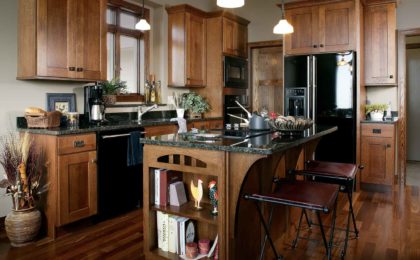
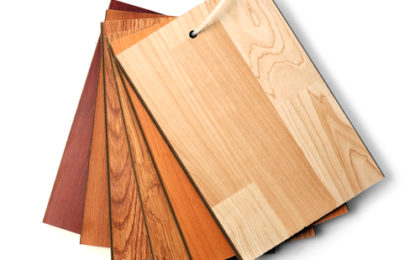
Solid wood cabinets offer unmatched natural beauty and character through distinctive grain patterns and color variations. Maple stands out as one of the most popular choices for modern kitchens due to its fine, consistent grain and excellent ability to accept both stain and paint finishes. The wood’s light natural color provides an ideal foundation for achieving crisp, clean painted surfaces that complement contemporary design schemes.
Oak remains a timeless choice, bringing pronounced grain patterns and natural durability to kitchen environments. Red oak features distinctive cathedral patterns that add visual interest, while white oak offers subtler grain characteristics that work well in more refined applications. Cherry wood develops rich, deep tones over time, creating cabinets that gain character and value as they age.
Hickory provides exceptional strength and features dramatic grain patterns that create striking focal points in kitchen designs. For homeowners seeking exotic options, woods like walnut offer sophisticated dark tones and flowing grain patterns, while birch provides affordable alternatives with good finishing characteristics. Each wood species brings unique properties that influence both appearance and performance in kitchen applications.
Benefits of Solid Wood in Modern Kitchens
The primary advantage of solid wood cabinets lies in their ability to be refinished and restored throughout their lifespan. Unlike engineered materials, solid wood can be sanded, stained, or painted multiple times, allowing homeowners to update their kitchen aesthetics without complete cabinet replacement. This flexibility proves particularly valuable in modern homes where design preferences may evolve.
Solid wood construction provides superior structural integrity, supporting heavy countertops and withstanding the daily stresses of kitchen use. The material’s natural properties allow it to expand and contract with seasonal humidity changes without compromising joint integrity when properly constructed. This stability ensures that doors and drawers continue operating smoothly for decades.
From an environmental perspective, solid wood cabinets represent sustainable choices when sourced from responsibly managed forests. The material’s biodegradability and renewable nature align with modern sustainability values, while its longevity reduces the frequency of replacement cycles that contribute to waste streams.
Cost, Maintenance, and Design Tips
Solid wood cabinets typically represent a significant investment, with costs varying considerably based on the wood species, construction quality, and finish complexity. Exotic hardwoods command premium prices, while domestic species like oak and maple offer more moderate pricing while still delivering excellent performance. Custom cabinets in solid wood provide unlimited design flexibility but require larger budgets than wholesale cabinets offering standard configurations.
Maintenance requirements for solid wood primarily focus on protecting finishes from moisture damage and preventing excessive exposure to direct sunlight, which can cause color changes. Regular cleaning with appropriate wood-safe products preserves finish integrity, while periodic applications of furniture wax or specialized wood conditioners maintain the material’s natural beauty.
Design considerations for solid wood cabinets in modern kitchens often involve balancing the material’s natural character with contemporary aesthetics. Painted finishes can minimize wood grain visibility for cleaner looks, while careful species selection ensures grain patterns complement rather than compete with other design elements. Strategic use of solid wood as accent elements alongside painted surfaces creates sophisticated contrasts that enhance modern kitchen designs.
2. Plywood Cabinets
Why Plywood Is a Preferred Core Material
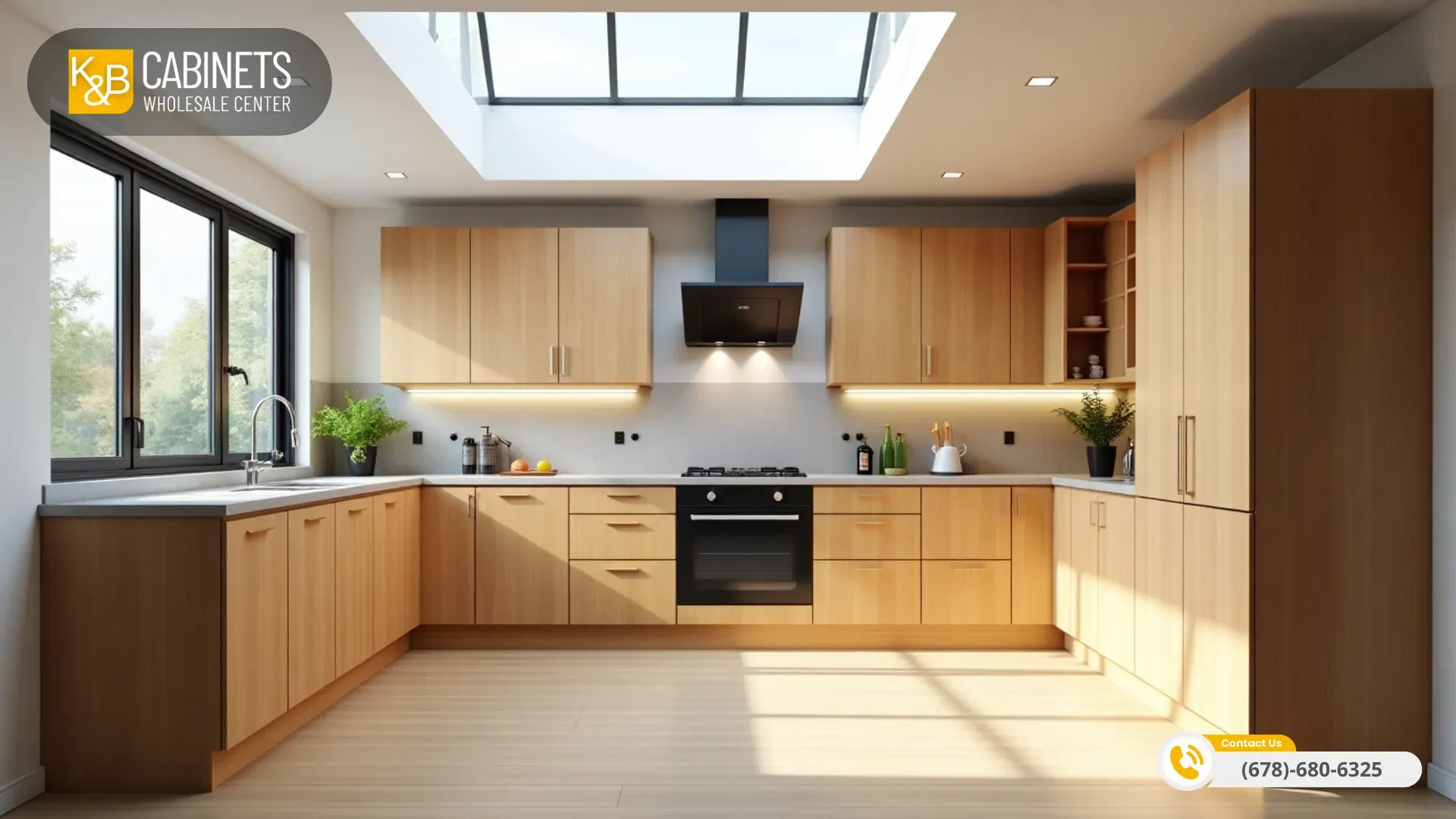
Plywood cabinets represent the gold standard for engineered wood construction in modern kitchen applications. The material’s layered construction, with alternating grain directions in each ply, creates exceptional strength and dimensional stability that surpasses many solid wood options. This cross-grain lamination effectively prevents warping, splitting, and other common problems that can affect cabinet boxes over time.
The manufacturing process for high-quality plywood involves carefully selecting veneer layers and bonding them with advanced adhesives under high pressure and temperature. This creates uniform materials with predictable performance characteristics, enabling precise manufacturing tolerances essential for modern cabinet hardware installation and proper door and drawer alignment. Plywood construction particularly excels in applications requiring large, flat panels that must remain stable under varying environmental conditions.
Different plywood grades offer varying levels of surface quality and void content, with cabinet-grade materials featuring smooth surfaces and minimal internal voids that could compromise structural integrity. Baltic birch plywood, renowned for its numerous thin layers and exceptional stability, represents one of the premium options for high-end cabinet construction.
Strength and Moisture Resistance Explained
The inherent strength of plywood stems from its cross-laminated construction, which distributes loads across multiple grain directions rather than relying on single-direction wood fibers. This multi-directional strength makes plywood cabinet boxes exceptionally resistant to sagging under heavy loads, while the alternating grain pattern prevents splitting along wood grain lines that can affect solid wood panels.
Moisture resistance in plywood cabinets depends largely on the adhesive systems used during manufacturing. Marine-grade adhesives provide superior water resistance for applications in high-humidity kitchen environments, while standard interior adhesives offer adequate performance for typical residential uses. The edge sealing of plywood panels becomes crucial for moisture protection, as exposed edges can allow water penetration into the layered structure.
Plywood construction particularly benefits modern kitchen designs that incorporate heavy stone countertops or large appliances that place significant structural demands on cabinet boxes. The material’s strength-to-weight ratio enables the creation of sturdy cabinet structures without excessive bulk, which can interfere with storage capacity or door operation.
Pairing Plywood with Contemporary Finishes
Modern kitchen aesthetics often emphasize smooth, uniform surfaces that create clean visual lines throughout the space. Plywood cabinets readily accept various finishing techniques that support these design goals, from painted surfaces that completely conceal wood grain to clear finishes that highlight the material’s layered edge details as design features.
Veneer applications over plywood cores enable the creation of custom cabinets with exotic wood appearances at costs significantly lower than solid wood alternatives. Book-matched veneer panels can create dramatic focal points, while consistent veneer selections maintain uniform appearances across large expanses of cabinetry. The dimensional stability of plywood cores ensures that veneer surfaces remain flat and smooth over time.
Paint finishes on plywood surfaces achieve exceptional smoothness due to the material’s uniform density and minimal grain raising. This characteristic proves particularly valuable for achieving the flawless painted surfaces that characterize high-end modern kitchen designs. The ability to sand plywood surfaces to fine smoothness levels enables professional finishing results that compete with the best solid wood applications.
3. Medium-Density Fiberboard (MDF) Cabinets
Pros and Cons of MDF in Modern Homes
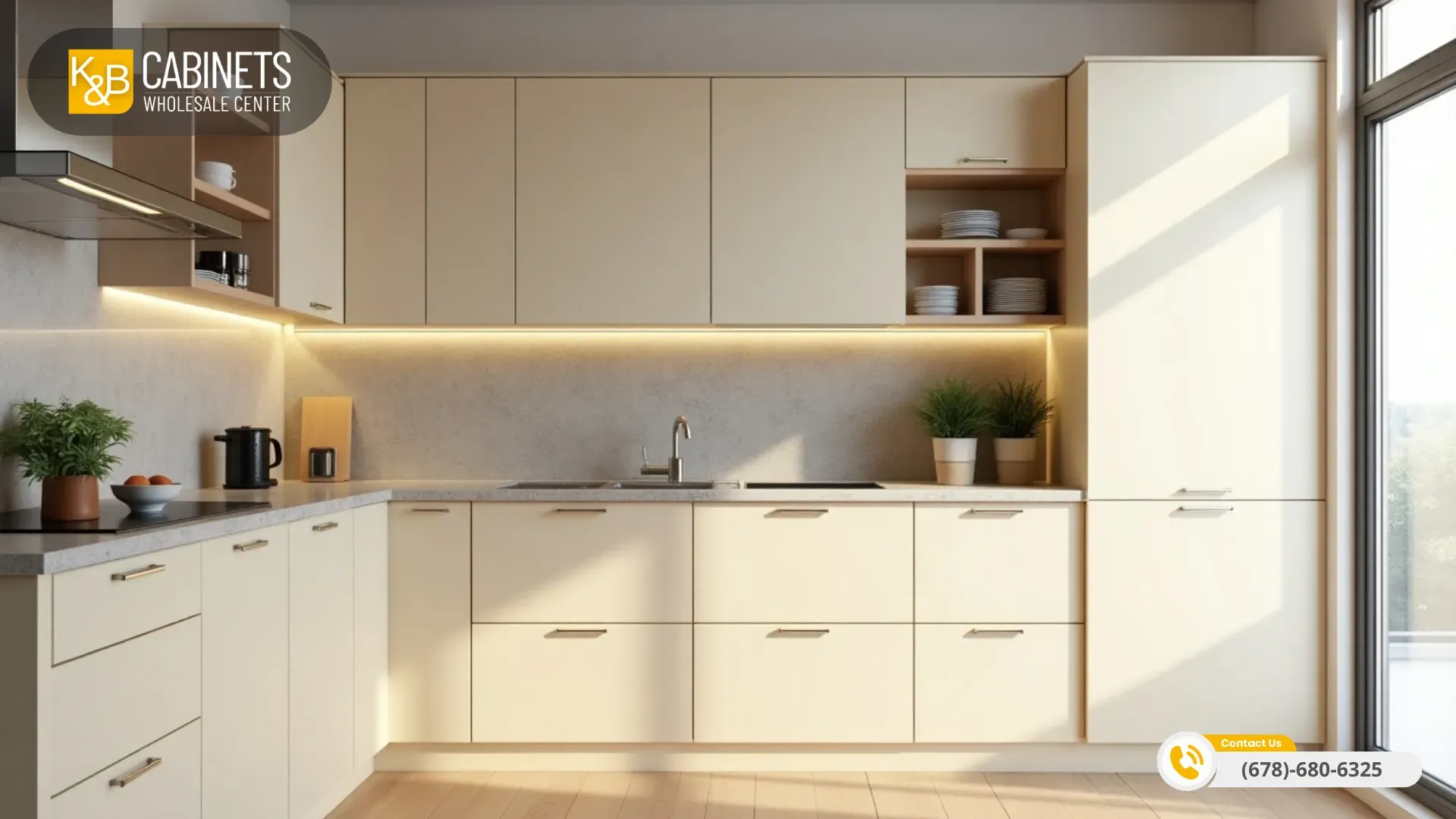
Medium-density fiberboard offers unique advantages for modern kitchen applications, particularly in situations where smooth painted finishes take priority over natural wood characteristics. The material’s uniform density and lack of grain patterns create ideal surfaces for achieving flawless painted cabinet doors that support contemporary design aesthetics. MDF construction enables the creation of complex molding profiles and decorative details that would prove expensive or difficult to achieve with solid wood.
The cost-effectiveness of MDF cabinets makes them attractive options for homeowners seeking high-end appearances without premium material budgets. When properly finished and maintained, MDF surfaces can achieve visual qualities that rival much more expensive alternatives, particularly in painted applications where wood grain visibility is not desired.
However, MDF materials present certain limitations that require careful consideration in kitchen environments. The material’s composite nature makes it more susceptible to moisture damage than solid wood or plywood alternatives, particularly along cut edges where the fiberboard core becomes exposed. Additionally, MDF’s density makes it heavier than many alternatives, requiring robust cabinet hardware and support systems to ensure proper operation over time.
Ideal Finishes and Paint Options for MDF
The smooth, uniform surface of MDF creates exceptional foundations for painted cabinet finishes that demand perfection. The material’s lack of grain patterns eliminates the telegraphing issues that can affect painted solid wood surfaces, where wood grain becomes visible through finish coats. This characteristic enables the achievement of furniture-quality painted surfaces at reasonable costs.
Primer selection becomes crucial for MDF finishing success, as the material’s porous nature requires sealers that prevent excessive paint absorption while promoting proper adhesion. High-quality oil-based or specialty MDF primers create sealed surfaces that accept topcoats uniformly, preventing blotchy appearances that can result from inadequate surface preparation.
Color consistency represents another significant advantage of MDF cabinets in modern kitchen applications. Unlike natural wood materials that may show color variations across different pieces, MDF accepts stains and paints uniformly throughout entire cabinet installations. This consistency proves particularly valuable in contemporary designs where color uniformity across large expanses of cabinetry supports clean, minimalist aesthetics.
Budget-Friendly Solutions Without Compromise
MDF cabinets enable homeowners to achieve sophisticated modern kitchen appearances while working within moderate budgets. The material’s affordability compared to solid wood or high-grade plywood options allows for allocation of budget resources to other kitchen elements like countertops, appliances, or cabinet hardware that significantly impact overall design success.
The manufacturing efficiency of MDF production translates to consistent availability and competitive pricing for wholesale cabinets applications. Standard cabinet configurations in MDF often cost significantly less than equivalent solid wood options, while still providing acceptable performance for typical residential kitchen uses. This cost advantage becomes particularly pronounced in large kitchen installations where material quantities significantly impact total project budgets.
Quality considerations for budget-conscious MDF installations focus on proper moisture protection and appropriate applications. Using MDF primarily for painted door and face frame applications while specifying plywood for cabinet boxes can optimize both cost and performance. This hybrid approach leverages MDF’s superior paint finishing characteristics while ensuring structural components provide long-term durability in demanding kitchen environments.

4. Particleboard Cabinets
What Makes Particleboard an Affordable Choice
Particleboard cabinets represent the most economical option for homeowners seeking basic functionality at minimal cost. The material consists of wood particles bonded with resin adhesives and compressed into panels, creating a uniform substrate that costs significantly less than solid wood, plywood, or MDF alternatives. This manufacturing process efficiently utilizes wood waste products, making particleboard an economically and environmentally efficient material choice.
The affordability of particleboard stems from its efficient production methods and the use of smaller wood particles that would otherwise become waste in other wood processing operations. This cost advantage enables complete kitchen cabinet installations at budgets that might only cover partial upgrades with premium materials, making particleboard particularly attractive for rental properties, starter homes, or temporary kitchen solutions.
Manufacturing consistency in particleboard production ensures uniform density and thickness throughout panels, facilitating efficient cabinet assembly processes. Wholesale cabinets utilizing particleboard construction often achieve remarkable cost competitiveness while still providing functional storage solutions that meet basic kitchen requirements.
When to Use It in Modern Kitchens
Particleboard cabinets find appropriate applications in modern kitchens where budget constraints outweigh longevity considerations, or where cabinet installations may be temporary pending future renovations. The material works particularly well in secondary kitchen areas, such as pantries, laundry rooms, or basement kitchens, where exposure to moisture remains minimal and aesthetic demands are less stringent.
Contemporary budget kitchen designs can successfully incorporate particleboard construction by focusing design attention on elements such as countertops, backsplashes, and cabinet hardware, which provide visual impact at a reasonable cost. Strategic use of particleboard for less visible cabinet components while upgrading door and drawer front materials can optimize both cost and appearance.
The uniformity of particleboard surfaces makes them suitable for laminate applications that support modern design themes. High-pressure laminates can transform basic particleboard substrates into attractive cabinet surfaces that mimic more expensive materials while providing easy-to-clean surfaces appropriate for busy kitchen environments.
How to Protect and Maintain Particleboard Cabinets
Moisture protection represents the most critical aspect of particleboard cabinet maintenance, as the material’s composition makes it particularly vulnerable to water damage. Proper edge sealing during installation prevents moisture penetration at cut edges, while quality finishes protect surface areas from spills and humidity. Regular inspection for signs of swelling or delamination enables early intervention before minor moisture exposure becomes significant damage.
Proper installation techniques significantly impact particleboard cabinet longevity. Adequate fastener selection ensures a secure assembly without over-compression, which could damage the material’s internal structure. Cabinet hardware installation requires careful drilling and reinforcement to prevent pullout failures that can occur when hardware loads exceed the material’s holding capacity.
Cleaning procedures for particleboard cabinets should emphasize immediate spill cleanup and avoid excessive moisture exposure. Mild cleaning solutions applied with slightly damp cloths provide adequate cleaning without saturating surfaces, while avoiding harsh chemicals that could damage protective finishes. Regular inspection of areas around sinks and other moisture sources enables prompt attention to potential problem areas.
5. Thermofoil and Laminate Cabinets
Sleek, Glossy Looks for Contemporary Styles
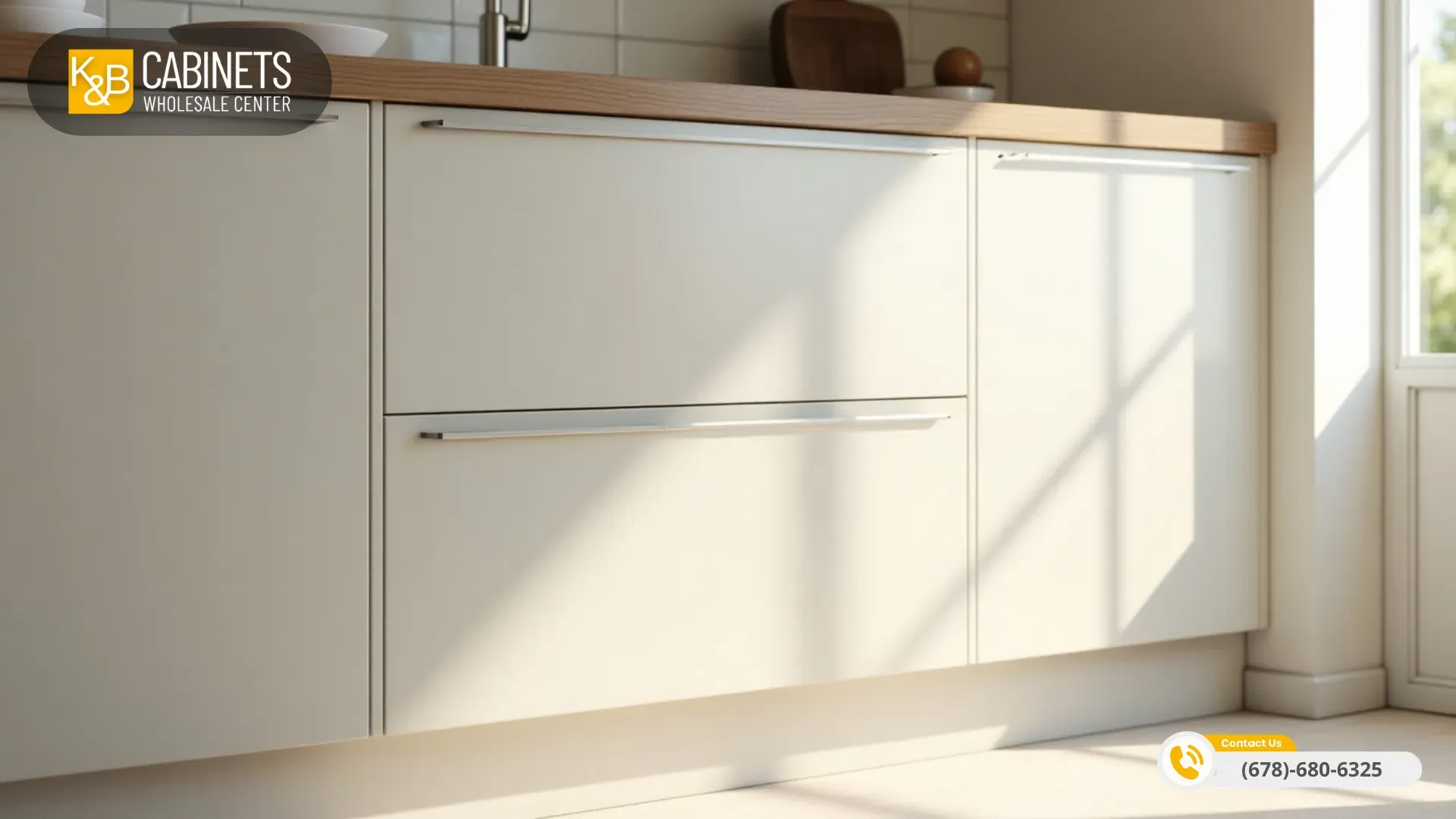
Thermofoil cabinets deliver the smooth, seamless surfaces that define contemporary kitchen aesthetics while offering exceptional durability and easy maintenance. The thermofoil process involves heating vinyl films and vacuum-forming them around MDF substrates, creating continuous surfaces without visible seams or joints. This manufacturing technique enables complex door profiles and decorative details while maintaining the uniform surfaces that characterize modern design themes.
Laminate cabinets provide similar aesthetic benefits through different manufacturing processes, with high-pressure laminates bonded to various substrate materials creating durable, attractive surfaces. Modern laminate options include sophisticated textures and patterns that successfully mimic natural materials like wood grain or stone patterns, while maintaining the practical advantages of engineered surfaces.
The range of colors and finishes available in thermofoil and laminate applications far exceeds options available with traditional wood materials. Bright whites, deep blacks, and bold accent colors that would be difficult or expensive to achieve with painted wood surfaces become readily available options. Metallic finishes, textured surfaces, and high-gloss options support a diverse range of contemporary design themes, from minimalist to industrial styles.
Durability and Easy-Clean Surfaces
The non-porous surfaces of thermofoil and laminate cabinets resist staining, moisture penetration, and bacterial growth more effectively than many traditional materials. These characteristics prove particularly valuable in busy kitchen environments where cleanliness and sanitation remain paramount concerns. The absence of grain patterns or surface porosity eliminates hiding places for bacteria and simplifies cleaning procedures.
Thermofoil surfaces demonstrate exceptional resistance to common kitchen hazards including grease, food acids, and cleaning chemicals. The material’s flexibility allows it to withstand minor impacts without chipping or cracking, while its chemical resistance enables the use of stronger cleaning products when necessary for sanitization or stain removal.
Laminate durability largely depends on surface quality and substrate preparation, with high-pressure laminates offering superior performance compared to lower-grade alternatives. Quality laminate installations resist scratching, heat damage, and wear patterns that might affect other surface materials, particularly when combined with appropriate substrate materials and professional installation techniques.
Matching Finishes with Hardware and Counters
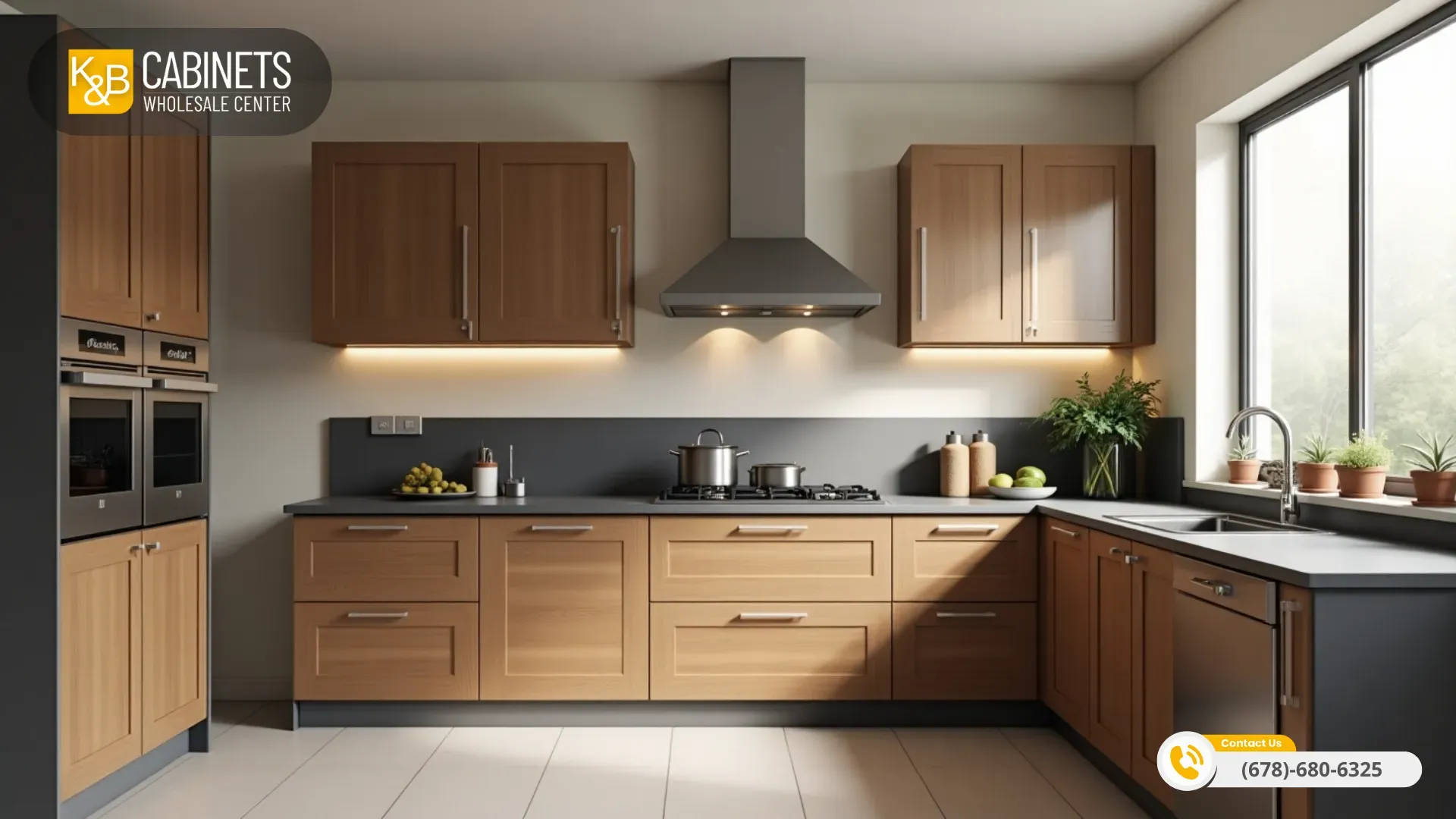
The versatility of thermofoil and laminate finishes enables seamless coordination with other kitchen elements, including countertops, backsplashes, and cabinet hardware. White thermofoil surfaces complement virtually any countertop material while providing neutral backgrounds that allow other design elements to serve as focal points. Bold laminate colors can coordinate with accent tiles or create dramatic contrasts with natural stone countertops.
Cabinet hardware selection for thermofoil and laminate applications should consider both functional and aesthetic factors. The smooth surfaces of these materials particularly benefit from hardware with clean lines and minimal visual complexity that supports contemporary design themes. Stainless steel, brushed chrome, and matte black finishes often complement the modern aesthetics that these cabinet materials support.
Edge treatments become particularly important considerations for laminate cabinets, as exposed edges can compromise both appearance and durability. Quality edge banding or solid edge treatments create seamless transitions that maintain the uniform surfaces essential for contemporary aesthetics while protecting substrate materials from moisture and damage.
| Cabinet Material | Key Features | Best For |
|---|---|---|
| Solid Wood | Natural beauty, durable, can be refinished | Classic, long-term kitchens |
| Plywood | Strong, stable, moisture-resistant | Modern, high-use kitchens |
| MDF | Smooth, paint-friendly, affordable | Painted, budget-friendly spaces |
| Particleboard | Most affordable, basic, low durability | Rental or low-traffic kitchens |
| Thermofoil/Laminate | Easy-clean, scratch-resistant, sleek look | Contemporary, family kitchens |
Comparing the 5 Cabinet Materials
Performance, Cost, and Design Comparison Table
Understanding the relative characteristics of different kitchen cabinet materials enables informed decision-making that balances performance requirements with budget constraints and design preferences. Solid wood typically provides the longest lifespan and highest resale value, but requires the largest initial investment and ongoing maintenance commitment. The material’s natural beauty and refinishing capability justify premium pricing for homeowners prioritizing longevity and traditional aesthetics.
Plywood offers excellent strength-to-cost ratios and superior moisture resistance compared to solid wood, making it an ideal choice for structural cabinet components, even when other materials are used for visible surfaces. The material’s dimensional stability and consistent quality make it particularly suitable for custom cabinets requiring precise tolerances and long-term performance.
MDF excels in painted applications where smooth surfaces take priority over natural wood characteristics, providing cost-effective solutions for achieving high-end painted cabinet appearances. Particleboard offers basic functionality at minimal cost but requires careful moisture protection and appropriate application selection to ensure satisfactory performance.
Thermofoil and laminate materials deliver modern aesthetics with exceptional durability and easy maintenance, often at costs comparable to or less than painted wood alternatives. These materials particularly suit contemporary design themes while providing practical advantages for busy kitchen environments.
Which Material Is Right for Your Modern Kitchen?
Selecting appropriate kitchen cabinet materials requires careful evaluation of priorities, including budget constraints, maintenance preferences, design goals, and expected longevity. Homeowners planning to remain in their homes for extended periods often benefit from investing in higher-quality materials, such as solid wood or plywood, which provide superior durability and refinishing options.
Budget-conscious homeowners can achieve attractive modern kitchen aesthetics through strategic material selection, perhaps combining MDF painted doors with plywood cabinet boxes, or selecting quality thermofoil surfaces that deliver contemporary appearances at moderate costs. The key lies in understanding which characteristics matter most for specific applications and allocating budgets accordingly.
Kitchen usage patterns significantly influence material selection appropriateness. Busy family kitchens benefit from durable, easy-to-clean surfaces, such as laminate or thermofoil, while formal kitchens with limited daily use may prioritize the aesthetic qualities of solid wood or custom cabinet construction. Environmental factors, including humidity levels, temperature variations, and exposure to moisture, should also influence material decisions.
Consider the overall home value and neighborhood standards when selecting cabinet materials, as kitchen quality significantly impacts resale values. Premium materials may represent wise investments in higher-value homes, while moderate-cost solutions might prove more appropriate for starter homes or rental properties.
FAQs for the 5 Best Kitchen Cabinet Materials for Modern Homes
What type of material is best for kitchen cabinets?
The best material for kitchen cabinets depends on your priorities for durability, aesthetics, and budget. Solid wood cabinets offer timeless beauty and strength, making them a top choice for cabinet longevity and classic style. For modern kitchen design, plywood cabinets are highly recommended due to their excellent cabinet durability, resistance to warping, and balanced cost. Engineered wood options like MDF cabinets and thermofoil cabinets are popular for their smooth finishes and affordability, while laminate cabinets provide a wide range of cabinet finishes and colors for contemporary spaces.
What is the best material for built-in cabinets?
Plywood is often considered the best material for built-in cabinets because it combines cabinet strength, moisture resistance, and cost-effectiveness. Plywood cabinets are constructed from layers of wood veneer, making them stable and less likely to warp over time. Many professionals also blend plywood with solid wood for cabinet doors and frames to maximize both cabinet aesthetics and durability. For high-end or custom projects, solid wood remains a premium choice, while MDF cabinets are suitable for painted finishes and smooth surfaces in modern homes.
What is standard kitchen cabinet material?
The standard kitchen cabinet material for most homes is a combination of plywood for the cabinet box and either solid wood or medium-density fiberboard (MDF) for the doors and drawer fronts. Plywood cabinets are favored for their cabinet strength and moisture resistance, while MDF cabinets are commonly used for their smooth finish and affordability. Particleboard cabinets are also used in budget-friendly kitchens but offer less cabinet durability and moisture resistance compared to plywood or MDF.
Are stainless steel kitchen cabinets durable?
Yes—incredibly. Stainless steel cabinets are exceptionally durable, resisting warping, moisture, heat, and pests, and can last decades in modern kitchen design. Their non‑porous surface is hygienic, easy to clean, recyclable, and ideal for busy cooking environments, though they’re more expensive, can scratch, and lean toward an industrial look.
What are the different types of cabinet materials?
There are several main types of kitchen cabinet materials:
- Solid wood cabinets (e.g., oak, maple, cherry): strong, long‑lasting, rich aesthetics, but costly, and can warp in humidity.
- Plywood cabinets: layers of wood veneer glued together—tough, moisture‑resistant, mid‑range cost.
- MDF cabinets (medium‑density fiberboard): smooth, paint‑ready, more stable than wood, affordable; can swell if not sealed.
- Particleboard cabinets: cheapest engineered wood, lightweight, least durable, not moisture‑friendly.
- Veneer cabinets: a thin, real-wood layer applied over plywood or MDF, offering good aesthetics and moderate cost, with some limitations due to moisture.
- Thermofoil cabinets: vinyl‑wrapped MDF—sleek, budget‑friendly, easy to clean, but vulnerable to heat.
- Laminate cabinets: synthetic resin layers—durable, stain‑ and scratch‑resistant, wide color range.
- Melamine cabinets: plastic‑coated engineered wood—moisture‑resistant, affordable.
- Stainless steel cabinets: ultra‑durable, modern aesthetic, hygienic, eco‑friendly—best for industrial‑style kitchens.
How do I choose the best kitchen cabinet material?
Match your cabinet material to your priorities. Consider these key factors:
- Durability & Strength – For longevity and resistance under heavy use, go with solid wood, plywood, stainless steel, or laminate.
- Moisture and Heat Resistance – Ideal in humid or active homes: stainless steel, plywood, MDF (when sealed), laminate, melamine, or thermofoil (avoid heat exposure).
- Aesthetics & Finishes – Prefer natural grain and warmth? Choose solid wood or veneer. Want sleek, contemporary lines with minimal hardware? Try thermofoil, laminate, or stainless steel.
- Cabinet Cost – Budget picks: particleboard, MDF, laminate, melamine; Mid‑range: plywood, veneer; Premium: solid wood, stainless steel.
- Maintenance & Longevity – Stainless steel is easy to clean and eco‑friendly (fully recyclable); wood needs dusting and occasional polishing. Engineered woods need sealed surfaces to prevent moisture swelling.
- Weight & Hardware – Plywood and metal are lighter than solid wood. All materials benefit from quality cabinet hardware—soft‑close hinges, durable glides—enhancing the overall cabinet longevity.
- Sustainability – For green kitchens: stainless steel (recyclable), reclaimed wood, certified hardwoods, or veneers over plywood reduce environmental impact.
What is the least expensive wood for kitchen cabinets?
Particleboard cabinets are typically the least expensive option for kitchen cabinet materials. They’re made from compressed wood particles and are budget-friendly, ideal for cost-conscious homeowners. However, they have lower cabinet durability and moisture resistance compared to solid wood or plywood cabinets, so proper cabinet maintenance is key to ensure longevity.
What is the best choice for kitchen cabinets?
Plywood cabinets are often considered the best choice for kitchen cabinet materials due to their balance of cabinet strength, moisture resistance, and cost. They’re made from layered wood veneers, offering durability and stability for modern kitchen design. Plywood supports various cabinet finishes and is a sustainable choice for long-lasting cabinet storage.
What is the best material for kitchen cabinets?
Solid wood cabinets are widely regarded as the best material for kitchen cabinets for their durability and timeless cabinet aesthetics. Hardwoods like oak, maple, or cherry offer excellent cabinet longevity and strength, making them ideal for high-traffic kitchens. With proper cabinet maintenance, they resist wear and pair well with modern cabinet hardware, though they come at a higher cabinet cost.
Is real wood or MDF better for cabinets?
It depends on your priorities for your kitchen cabinet materials. Solid wood cabinets offer natural beauty, can be refinished multiple times, and are highly durable, often lasting for decades. However, they are generally more expensive and can be susceptible to warping or cracking with humidity changes. MDF (Medium-Density Fiberboard) cabinets are more affordable, offer a very smooth surface ideal for painted finishes, and are more stable in humid environments, resisting warping and cracking.
However, MDF is not as strong as solid wood, can be prone to chipping, and cannot be easily repaired or refinished. For a truly modern kitchen design with a sleek, painted look and a budget in mind, MDF cabinets are a great choice, while solid wood cabinets are a premium option for their longevity and natural aesthetic.
What is the most durable kitchen cabinet finish?
Lacquer and semi-gloss polyurethane finishes are generally considered among the most durable for modern kitchen cabinet materials. Lacquer provides a very hard, smooth, and often high-gloss surface that resists moisture, scratches, and cooking residue, making it excellent for busy kitchens. Semi-gloss polyurethane is also highly durable, offering good resistance to heat, chemicals, scratches, and water. Both are popular for modern kitchen design due to their sleek appearance and ease of cleaning, contributing significantly to cabinet longevity.
What is the cheapest material for kitchen cabinets?
Particleboard is typically the most budget-friendly material for kitchen cabinets. It’s an engineered wood product made from wood chips and resin, making it lightweight and easy to work with. While very affordable, particleboard cabinets are less durable and more susceptible to moisture damage and sagging under heavy weight compared to other kitchen cabinet materials, such as MDF cabinets or plywood cabinets. For more affordable options that still offer good performance, MDF cabinets are a popular choice, especially when covered with a laminate or thermofoil finish.
What material are kitchen cabinets made of?
Kitchen cabinets are typically made from solid wood, plywood, medium-density fiberboard (MDF), particleboard, or engineered wood materials. The most common kitchen cabinet materials include maple, oak, and cherry for solid wood options, while budget-friendly choices often use particleboard or MDF with laminate or thermofoil finishes. Each material offers different levels of cabinet durability, moisture resistance, and cabinet cost considerations for modern kitchen design.
What are high quality kitchen cabinets made of?
High quality kitchen cabinets are made from solid wood or high-grade plywood with premium cabinet finishes. Solid wood cabinets, such as those made from maple, cherry, or walnut, offer superior strength and longevity, while plywood cabinets provide excellent moisture resistance and dimensional stability. Premium options feature dovetail joints, soft-close cabinet hardware, and hand-applied stains or paints that enhance both cabinet aesthetics and cabinet durability for long-term performance.
Can you paint over thermofoil cabinets?
Yes, you can paint over thermofoil cabinets, but proper preparation is essential for lasting results. Thermofoil cabinets require thorough cleaning, light sanding, and a high-quality primer designed for laminate surfaces before applying paint. While this cabinet maintenance approach can refresh your kitchen’s appearance at a lower cabinet cost than replacement, the paint may not adhere as well as it would to solid wood cabinets or MDF cabinets, potentially affecting the finish’s longevity in high-moisture areas.

What Our Customers Say About K&B Cabinets Wholesale Center
H B, Quality & Customization Excellence Advocate
H B delivers an enthusiastic testimonial that showcases K&B Cabinets’ exceptional quality and precision craftsmanship that exceeds customer expectations. Their review emphasizes the sturdy, stylish construction combined with meticulous attention to detail, while highlighting K&B’s remarkable custom color matching capabilities that bring unique visions to life. H B particularly praises the knowledgeable and friendly team that provides expert guidance throughout the entire process, combined with their extensive stock inventory that ensures quick turnaround times without sacrificing selection variety. Their glowing endorsement positions K&B as a rare find in today’s market that truly delivers the perfect combination of quality, service, and customization excellence.
Amira Suljkanovic, Seamless Process Specialist
Amira shares her outstanding experience with K&B Cabinets, highlighting their ability to deliver exactly what they promise with high-quality cabinets featuring beautiful finishes. Her testimonial emphasizes the exceptional contractor performance and the remarkably smooth process from start to finish, demonstrating K&B’s commitment to seamless project execution. Amira’s strong recommendation specifically targets homeowners looking to upgrade their kitchens, showcasing K&B’s expertise in delivering consistent results that meet expectations while maintaining professional standards throughout the entire installation process.
Sam Guler, Wholesale Value Champion
Sam Guler represents the experienced builder perspective, praising K&B Cabinets’ unbeatable wholesale pricing for good quality kitchen cabinets through over five years of successful partnership. Their testimonial specifically recognizes the significant cost savings achieved across more than 50 house projects, highlighting the exceptional value proposition that drives business success. This long-term commercial endorsement demonstrates K&B’s commitment to serving builder partnerships and their understanding of the competitive pricing and consistent quality that enable profitable project completion in the residential construction industry.
Choose K&B Cabinets for your cabinet needs and experience the same level of satisfaction as our valued clients. Our dedicated team specializes in providing high-quality cabinets with unparalleled service, making us the ideal partner for all your cabinetry needs.
From exceptional craftsmanship with sturdy, precision-built products to custom color matching capabilities that bring unique visions to life, we take pride in delivering superior value through our comprehensive service offerings. Our proven experience serving quality-focused homeowners, kitchen upgrade specialists, and volume builders has established us as a trusted name in the industry. Whether seeking custom design solutions, seamless kitchen transformations, or wholesale value partnerships, K&B Cabinets is committed to providing top-notch quality products backed by knowledgeable teams and extensive inventory selection.
Our combination of superior quality craftsmanship, custom color matching, competitive wholesale pricing, and proven track record of smooth project execution makes us the wise choice for all your cabinet needs. Experience the perfect balance of precision manufacturing, friendly guidance, and reliable service delivery, making K&B Cabinets your preferred choice for residential and commercial cabinetry projects. With extensive stock inventory and exceptional attention to client requirements, we ensure that every installation transforms spaces while maintaining the highest standards of quality and customization excellence.
Transform Your Home with K&B Cabinets Wholesale Center
K&B Cabinets Wholesale Center offers an extensive selection of high-quality kitchen cabinets and bathroom vanities at competitive prices, positioning us as the premier bathroom vanities store in Norcross, GA. As a leading cabinet wholesaler in the Southeast, we proudly serve multiple locations, ensuring our customers have access to top-notch products and services.
Visit Our Showroom
- Norcross Showroom: 6684 Jimmy Carter Blvd, Norcross, GA 30071
Why Choose K&B Cabinets?
- Guaranteed Lowest Price: We are committed to customer satisfaction by delivering superior construction at unbeatable factory-direct prices.
- Fast Lead Times: Enjoy some of the quickest lead times in the industry, with many orders ready in just 3-5 days.
- Professional Design Services: Our skilled design consultants are here to help you create the ideal kitchen tailored to your needs.
- High-Quality Products: All our cabinets are crafted from 100% solid wood, ensuring durability and environmental safety.
K&B Cabinets offers the best American-made cabinet brands. Explore our Eurocrafts Cabinetry for Euro Frameless Cabinets!
Contractors, Dealers, and Builders! Are You Ready to Transform Homes?
Visit our gallery and contact us to embark on your journey toward modern home transformation today!
Conclusion
The selection of appropriate kitchen cabinet materials represents a crucial decision that influences both daily kitchen functionality and long-term satisfaction with kitchen spaces. Understanding the characteristics, benefits, and limitations of different material options empowers homeowners to make informed choices that align with their specific needs, preferences, and budget constraints.
Modern kitchen design continues evolving toward cleaner aesthetics, improved functionality, and enhanced durability, creating opportunities for various cabinet materials to excel in different applications. Whether prioritizing the natural beauty of solid wood, the structural advantages of plywood, the paint-friendly surfaces of MDF, the affordability of particleboard, or the contemporary appeal of thermofoil and laminate options, successful kitchen designs result from thoughtful material selection that considers all relevant factors.
The investment in quality kitchen cabinet materials pays dividends through years of reliable service, maintained aesthetics, and continued satisfaction with kitchen environments that serve as the heart of modern homes. By understanding the unique characteristics of each material option and how they support different design goals and usage patterns, homeowners can create kitchen spaces that successfully balance form, function, and value for years to come.